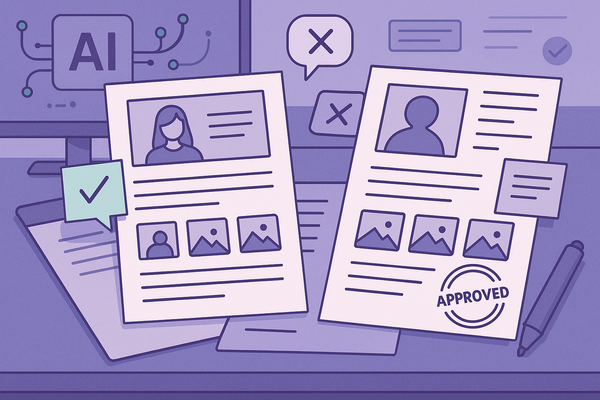
The bottleneck moved: AI can draft your course, but it still can't get it approved

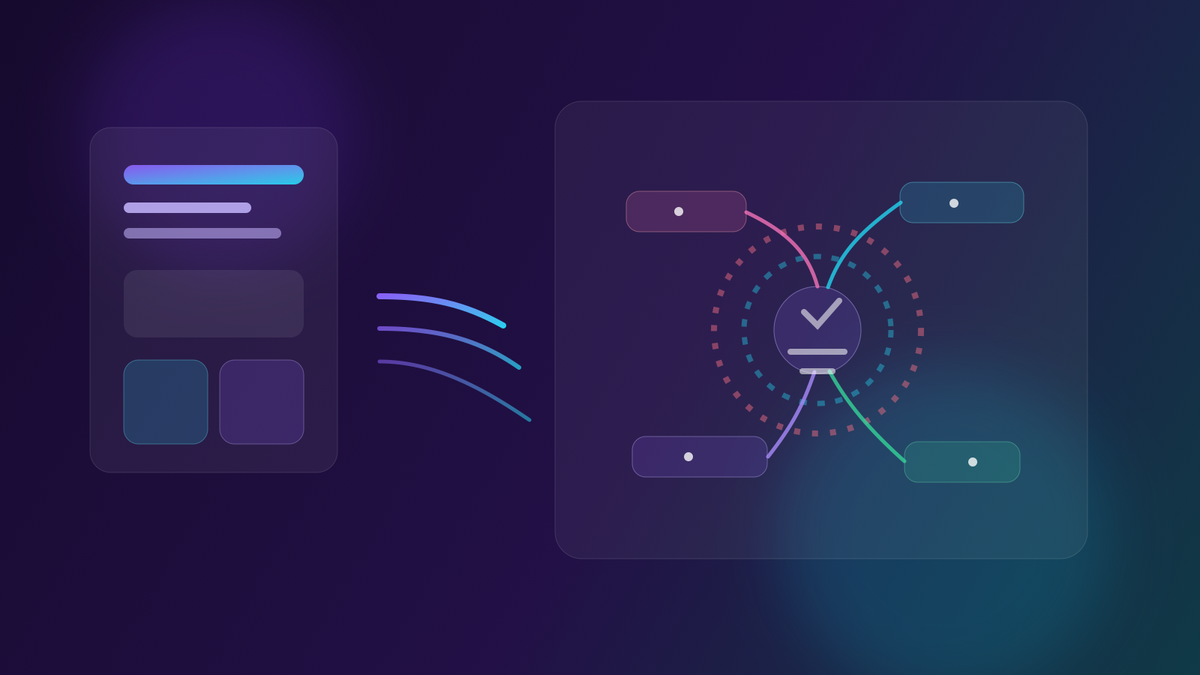
A lot of eLearning teams are having the same weird experience right now.
The first draft got faster. Sometimes way faster. You can get quiz questions, module outlines, learner personas, voiceover drafts, and image prompts in minutes.
And yet the project still ships late.
That is not a contradiction. It just means the bottleneck moved.
For years, the slow part of course production was making the stuff. Writing screens. Building interactions. Recording audio. Hunting down images. Cleaning up SME notes that looked like they were typed during a hostage situation.
AI helped with that part. Not perfectly, but enough to matter.
What it did not fix is everything that happens after the draft exists.
Faster drafts exposed the real problem
If you've built eLearning for any length of time, you already know this: content creation is only one slice of the job.
The rest is review, cleanup, version control, approval, compliance, deployment, and the endless loop of "small updates" that somehow eat two more weeks.
AI made the first slice cheaper. Good. That was overdue.
But once that slice shrank, the rest of the mess became impossible to ignore.
Here's what I keep seeing:
- SMEs give feedback in Word, email, Slack, and hallway conversations
- reviewers disagree with each other and nobody owns the final call
- translated courses come back with broken layouts and audio timing issues
- compliance teams want proof of what changed, when, and why
- published SCORM packages need updates, but the source files are gone or trapped with a vendor
That is where time goes.
Not on the draft. On the handoff.
Most AI course workflows stop too early
A lot of "AI for eLearning" demos end at the most flattering moment.
They show a clean prompt, then a decent-looking outline, then maybe a quiz or storyboard. Everyone nods. It looks efficient.
Then real work starts.
Somebody has to decide whether the outline is actually right.
Somebody has to spot where the SME slipped in a legal risk.
Somebody has to fix the screenshot with text baked into the image.
Somebody has to compare version 7 against version 9 because a regulator asked what changed.
Somebody has to push the update into a live LMS without breaking reporting.
That's the job. The rest is a parlor trick.
I am not downplaying AI here. I use it every day. We build with it every day. But if your workflow stops at "AI generated a draft," you solved the fun part, not the expensive part.
The new cost center is review debt
I think review debt is becoming the new technical debt for course teams.
By review debt, I mean all the unresolved friction that piles up after content is generated:
1. Too many reviewers, no decision path
This is the classic failure mode. AI makes it easier to produce more draft material, which means more material gets thrown into review, which means more comments, more confusion, and more waiting.
If five people can comment but nobody can approve, AI just helped you create a larger traffic jam.
2. Approval is still trapped in bad tools
A lot of teams still use email chains, exported PDFs, annotated screenshots, and disconnected LMS previews. That was already painful. It gets worse when AI increases output volume.
The problem is not generating more course content. The problem is routing the right content to the right person with context.
3. QA work did not go away
Translation is a perfect example. Machine translation is fast now. Great. But post-translation QA is still ugly.
Text expands. Layouts break. Audio overlaps. Image text stays in English. Somebody still has to catch that.
Same story with accessibility. Same story with branching logic. Same story with SCORM packaging.
4. Updates are where projects quietly die
Most course libraries are not greenfield builds. They are maintenance jobs wearing a fake mustache.
The real question is not "Can AI make this course?" It is "Can this team update version 14 without rebuilding the whole damn thing?"
That is where budgets get burned.
What smart teams are doing instead
The teams getting real value out of AI are not treating it like a copy machine. They are treating it like a draft engine inside a controlled pipeline.
That means a few practical shifts.
Put structure before generation
Don't start with a blank prompt if you can start with a storyboard, template, content model, or review schema.
Structure beats clever prompting almost every time.
When teams define what good input looks like, AI output gets more usable and review gets shorter. Not because the model got smarter. Because the workflow stopped being sloppy.
Design the approval path before the draft exists
Who reviews first? Who can approve? What feedback is binding? What happens when legal and the SME disagree?
If you don't answer that before generation, the draft just enters a swamp.
Build for updates, not one-time output
This one matters more than people want to admit.
Courses change. Policies change. screenshots age badly. UI demos become lies in six weeks.
Any AI workflow that cannot support delta updates, change tracking, and repeatable refreshes is going to feel impressive in a demo and miserable in production.
Separate generation from validation
Generating content and validating content are different jobs.
You want AI helping with both, but not in the same way.
Draft generation needs speed and structure.
Validation needs rules, comparison, review states, and audit trails.
Treat those as one blob and you'll miss obvious failures.
Where this is heading
My bet is simple: the next useful wave of AI in eLearning will not be "write more screens faster."
It will be systems that reduce review friction, handle messy handoffs, track deltas cleanly, and patch live training without forcing full rebuilds.
That is less flashy than a prompt demo. It is also where the money is.
Because course teams are not drowning in blank pages anymore.
They are drowning in comments, approvals, revisions, variants, compliance checks, and update requests.
If you're building for this space, build there.
If you're buying tools for this space, buy there.
The bottleneck moved. Pretending it didn't is how teams end up with faster drafts and the same late launches.
And honestly, that would be a pretty stupid use of good technology.