AI made course drafting faster. It did not fix review.
AI speeds up drafting. Review, approval, and update chaos still eat the schedule.

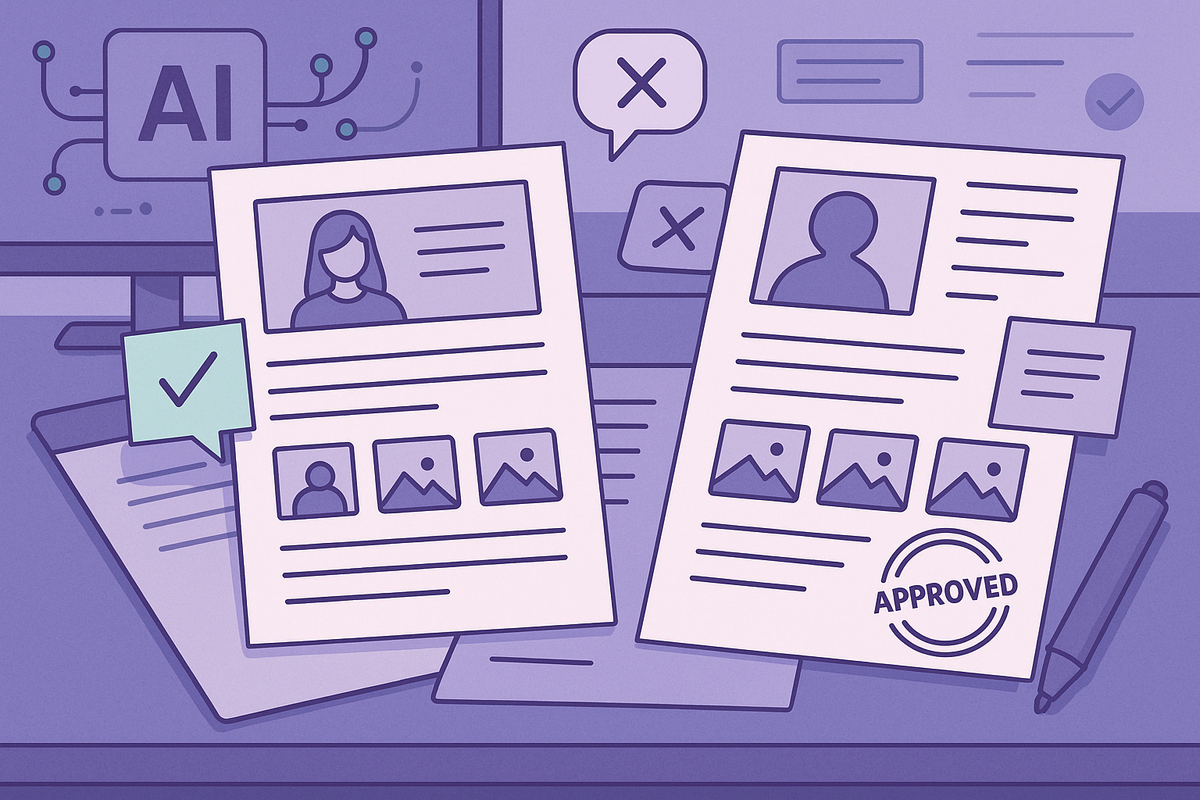
AI made course drafting faster. It did not fix review.
Most AI talk in eLearning still circles the same trick: faster first drafts.
Fine. Useful, even. But it misses the part that still burns weeks off the schedule.
Review.
Not writing. Not block assembly. Not even media generation. Review, approval, and cleanup are where projects still go to die. If you've built courses for any length of time, you already know the pattern. The draft comes together fast, then it sits with SMEs, legal, compliance, managers, translators, or somebody who wants to "just tweak a few things" in slide 37.
That bottleneck matters more now because AI actually did speed up the front half. We can generate outlines faster. We can turn storyboards into course structure faster. We can draft quiz questions, voiceover, and visuals faster. So the slow part is easier to see. It was always there. Now it's glaring.
Faster drafting exposed the real bottleneck
A lot of teams assumed AI would compress the whole production cycle. It doesn't. It compresses the part that's easiest to automate.
That usually means:
- first-pass structure
- rough copy
- quiz drafts
- image prompts
- voiceover drafts
- low-level assembly work
Useful? Absolutely.
But none of that gets a course approved.
The ugly truth is that most delays happen after the content exists. They happen when:
- SMEs dump feedback in email, Word comments, Slack, and meetings
- legal wants exact wording changes without context
- compliance needs an approval trail
- one source change has to ripple through multiple course versions
- localization creates a second review cycle instead of finishing the first one
- nobody agrees on what is actually final
That's not a content-generation problem. That's a workflow problem.
"AI course creation" is getting commoditized fast
This is another reason the review bottleneck matters.
Basic "upload content, get a course" features are everywhere now. Video to SCORM. Docs to lessons. AI quizzes. AI narration. Slide generation. Most of that is becoming table stakes. Good enough automation is spreading faster than most vendors want to admit.
So if you're building in this space, the real question isn't "can AI make a draft?"
It's "what happens after the draft exists?"
That's where the mess lives.
And frankly, that's where a lot of product teams still get lazy. They demo the magic trick, then quietly hand the user back the same broken review process they had before.
What review actually looks like in the wild
It is usually some ugly mix of these:
1. Feedback lives in five places
Comments in the storyboard. Edits in the LMS preview. Notes from a Zoom call. Screenshots in email. Random Slack messages. By the time someone says "we already covered that," nobody can prove it.
2. SMEs are not course builders
This should not be controversial, but somehow it still is. Most SMEs should not be inside Storyline, Rise, or any authoring tool more complex than a web form. They know the subject. They do not want to manage layout, triggers, states, media timing, or block logic.
Yet teams keep handing them the wrong interface, then act surprised when the process slows to a crawl.
3. Approval is vague until it becomes political
"Looks good" is not approval. Neither is silence.
If you don't have clear sign-off states, named approvers, and a record of who approved what version, you do not have a review process. You have vibes.
4. Every update reopens old wounds
One small source change can trigger copy edits, audio changes, layout fixes, translation updates, and another approval pass. That problem gets worse when teams manage variants across products, regions, or compliance tracks.
What useful tooling should do instead
If I were buying eLearning AI tools right now, I would care less about flashy generation and more about whether the product reduces review chaos.
That means the tool should:
- give SMEs a dead-simple review surface
- keep comments attached to the exact slide, block, or section they refer to
- track approval state by person and by version
- show what changed since the last review round
- route work cleanly from SME to ID to legal to final sign-off
- preserve an audit trail without making people hate the system
That is not glamorous. It is valuable.
And unlike another generic AI writer bolted onto a course builder, it actually removes the work people complain about.
This is where our own product thinking has shifted
At Happy Alien, we've spent a lot of time on generation, conversion, and assembly. That still matters. Storyboards should turn into Rise faster. Old course formats should not require full rebuilds. AI should absolutely handle repetitive production work.
But the more research we do, the more obvious it gets that the downstream mess is where the bigger opportunity sits.
A few examples:
- Storyboard2Rise gets stronger when it supports editable round-trip review, not just import.
- Course Translator gets stronger when it manages QA and update propagation, not just raw translation.
- VidSabio gets stronger when it plans the learning transformation, not just wraps video into SCORM.
- CoursePipelines gets stronger when it owns routing, approvals, and state changes across the whole workflow.
Same pattern every time. The draft is not the finish line.
What course teams should do right now
If you're using AI in your eLearning workflow today, do this simple gut check.
Ask:
1. Did AI speed up drafting?
2. Did it reduce review rounds?
3. Did it shorten approval time?
4. Did it make updates easier six weeks later?
If the answer is yes to the first one and no to the next three, then your bottleneck just moved downstream.
That's still progress, but don't confuse it with a solved workflow.
The teams getting the most value from AI won't be the ones with the fanciest demo. They'll be the ones that reduce handoff friction, review chaos, and approval drag.
Because in real course production, that's where the time goes.
And yes, it's less sexy than "make me a course from this PDF."
It's also where the money is.