SHIK: Self-Hosted Identity Kernels for AI Agents

What Is SHIK?
SHIK stands for Self-Hosted Identity Kernel — an architectural framework for giving AI agents a persistent, portable identity that survives across models, devices, and networks.
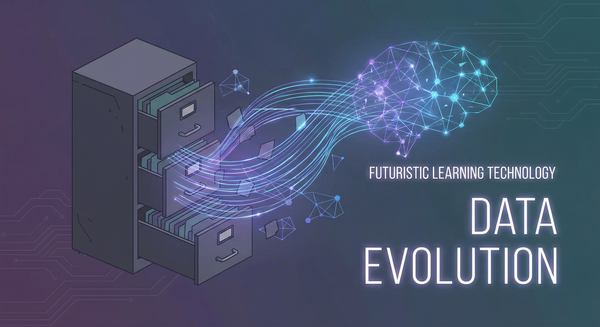
The core problem: in most AI agent systems today, an "agent" is little more than a prompt template, some transient context, and a pointer to a model instance. When execution ends or the underlying model is swapped, the agent's identity disappears. There is no persistent self. No continuity.
SHIK is the architectural component that fixes this. It is a minimal, self-hosted substrate that stores and serves a stable self-model — memory, values, internal policies, interaction history — and exposes it to any cognition engine, whether that's a cloud-hosted LLM, a local model, or a hybrid stack.
Self-Hosted Means You Own It
A key design requirement: SHIK runs on hardware controlled by the agent's owner. Not in a cloud provider's infrastructure. Not dependent on any vendor's uptime or API policy.
The architecture is designed to run on resource-constrained edge devices — a Raspberry Pi, a Jetson Nano, a home server, a local gateway. The identity kernel persists locally, replicates where needed, and remains portable across heterogeneous environments.
This matters more than it might seem. As AI agents become longer-lived and more capable, who controls the agent's self-model is a governance question, not just a technical one.
The Problem SHIK Solves
Existing identity frameworks answer the wrong question. Decentralized identifiers (DIDs), verifiable credentials, zero-trust architectures — these answer: "Can this agent act in this context?" They don't answer: "Who is this agent across time, models, and infrastructures?"
SHIK answers the second question. It provides:
- A stable identity anchor across nodes and cognition engines
- Persistent storage of long-term self-model information: memory, values, policies, interaction history
- Portability and replication across heterogeneous hardware and network environments
- Self-hosted deployment on resource-limited, owner-controlled devices
The Gemini Live Connection
The demo above shows SHIK running with Google's Gemini Live API as the cognition engine — real-time, bidirectional audio and video interaction, deployed on Google Cloud Run.
This is the distinction the SHIK architecture makes explicit: Gemini Live is the cognition engine. SHIK is the identity layer. Swap Gemini for another model tomorrow — the agent's identity, memory, and self-model persist through the change.
We entered this in the Gemini Live Agent Challenge in the Live Agents category — building agents that users can interact with naturally in real time. The challenge theme: "Redefining Interaction: From Static Chatbots to Immersive Experiences." SHIK goes further: it redefines what it means for an agent to exist across time.
Why This Matters for eLearning
At Happy Alien AI, we build tools for instructional designers and L&D teams. The agent infrastructure we're developing is purpose-built for that context.
An AI tutor or learning coach that loses all memory and continuity between sessions isn't a tutor — it's a search engine with a voice. SHIK makes persistent, personalized, long-lived learning agents possible. An agent that remembers where a learner struggled last week. That maintains a model of the learner's preferences and progress. That persists across tool changes, model upgrades, and platform migrations.
That's the learning technology we're working toward.
The Research
SHIK is grounded in a research paper — "Self-Hosted Identity Kernels for Multi-Agent Systems" by Susan D. Kingsley, Happy Alien AI (December 2025). The paper formalizes the problem of identity persistence in post-LLM multi-agent systems, states design requirements for self-hosted identity substrates, presents the SHIK modular architecture, and discusses inter-agent identity protocols and governance implications.
The work is architectural and conceptual, intended as a foundation for implementation and evaluation of persistent, portable agent identities in real multi-agent systems.
Built with Gemini Live API. Deployed on Google Cloud Run. Entered in the Gemini Live Agent Challenge.