Chrome just made websites "agent-ready"

Chrome just made websites "agent-ready"
Google dropped something significant this week, and it flew under most people's radar.
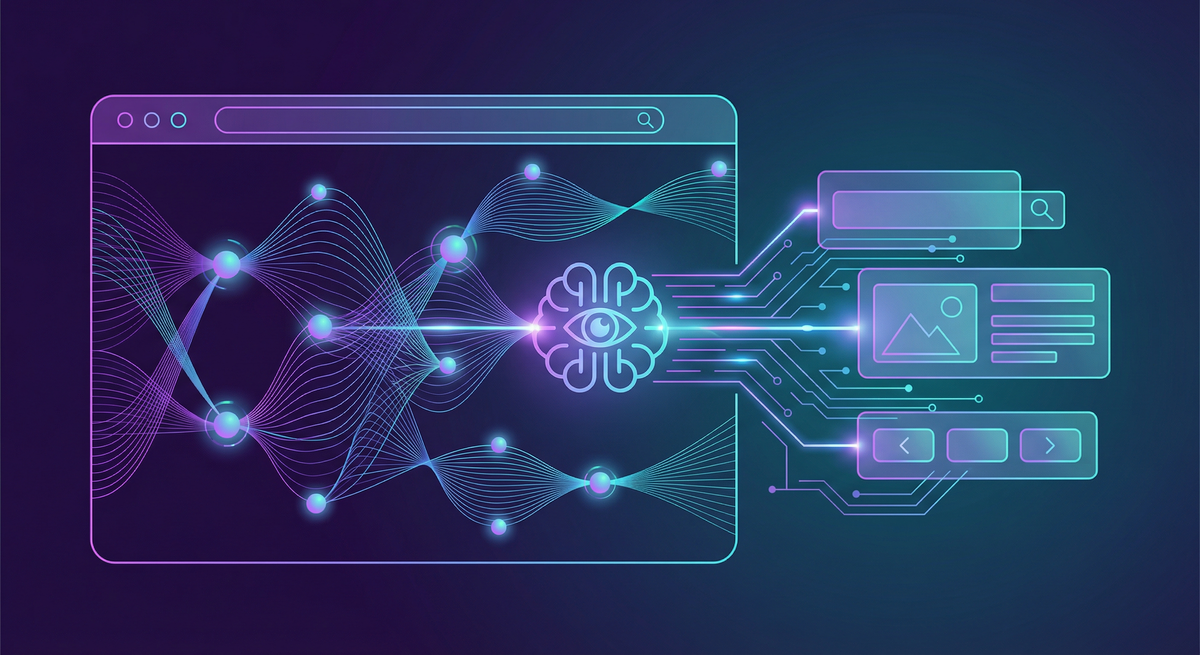
WebMCP is now in early preview. It's a new standard that lets websites tell AI agents exactly how to interact with them. Not through brittle screen-scraping or DOM manipulation, but through structured, documented APIs.
If you've been watching the AI agent space evolve, this is the moment it stops being a developer toy and starts becoming infrastructure.
What WebMCP actually is
MCP (Model Context Protocol) has been gaining traction as a way for AI models to interact with external tools and data sources. WebMCP brings this concept directly into the browser.
Chrome is introducing two new APIs:
The Declarative API handles standard actions that can be defined directly in HTML forms. Think search boxes, filters, simple submissions.
The Imperative API handles complex interactions that require JavaScript execution. Think multi-step checkout flows, conditional logic, real-time validation.
Together, these APIs create a bridge between AI agents and websites. Instead of agents guessing where to click or parsing unpredictable DOM structures, websites can explicitly declare: "Here's how you book a flight. Here's how you file a support ticket. Here's how you add items to a cart."
Why this changes everything
Right now, AI agents that interact with websites are fragile. They rely on:
- Screenshot analysis and visual recognition
- DOM parsing that breaks when layouts change
- Heuristics that work until they don't
WebMCP flips this model. Websites become active participants in the agent ecosystem, not passive targets to be scraped.
Google's examples focus on consumer use cases (travel booking, ecommerce, customer support). But the implications run much deeper.
The eLearning angle
For those of us building in the learning and development space, WebMCP opens interesting doors.
LMS automation becomes realistic. Imagine AI agents that can reliably enroll learners, assign courses, pull completion reports, and manage user permissions. Not by reverse-engineering the LMS interface, but by using structured tools the LMS explicitly provides.
Support workflows get smarter. Learners stuck on a technical issue? An agent could file a detailed support ticket with all the right context (course name, module, error state) without the user filling out a form.
Course management scales. Bulk operations that currently require clicking through endless admin screens could become single agent commands.
The key word is "reliably." Current agent-based automation is impressive but breaks easily. WebMCP makes it solid.
What's available now
WebMCP is in early preview, which means:
- Documentation and demos are available to program participants
- The APIs are still evolving based on feedback
- Production adoption is probably 6-12 months out for most sites
If you're building web applications, especially ones where users perform complex multi-step tasks, this is worth paying attention to now. The sites that adopt WebMCP early will have a significant advantage as AI agents become mainstream.
The bigger picture
We're watching the web evolve in real-time. First it was static pages. Then web applications. Then mobile-first design. Now: agent-ready architecture.
The agentic web isn't a future prediction anymore. Chrome is shipping the infrastructure for it today.
Websites that embrace this shift will become more useful, more automatable, and more integrated into the AI-powered workflows their users are already adopting. Sites that ignore it will feel increasingly clunky by comparison.
The early preview program is open now. If you're building for the web, it's worth a look.